
The Secret to Soft Baby Hair—No Harsh Chemicals Needed
Ever wondered if simple steps can keep your little one’s hair soft while skipping strong chemicals?
We know newborn strands often shed in the first months because of hormonal shifts and friction.
Our aim is to offer a gentle, practical plan you can trust. We focus on mild cleansing, minimal friction and calm styling that protects the scalp and supports natural growth.
Use lukewarm water, a light touch and soft fabrics. These small choices reduce irritation and help hair stay smooth and snuggly-soft.
We’ll explain how often to wash, which tools to choose and why some changes in texture and colour are normal as growth finds its rhythm.
Key Takeaways
- Gentle routine beats frequent strong products for scalp comfort.
- Wash sparingly with mild shampoo; avoid heavy fragrances.
- Soft brushes and fabrics reduce breakage and friction.
- Shedding around 2–3 months is common; regrowth usually follows.
- Simple daily habits help long‑term softness and healthy growth.
Understanding newborn hair: what’s normal in the first months
The story of newborn hair starts in utero. Follicles form around week 14–15, and fine lanugo appears near 20 weeks. That soft covering helps trap vernix and keeps temperature steady before birth.
Newborns may arrive with lots of fuzz, thick growth or almost no visible strands at all. All of these are normal for babies born in Australia and elsewhere.
From follicles in utero to that first fuzzy mop
Many infants shed between 2–3 months as pregnancy hormones fall — this exogen phase is expected. Positions and contact points can make shedding look uneven, but new growth usually follows.
Why colour and texture can change over time
Colour and texture shift as fresh follicles cycle in. The scalp is still maturing, so gentle handling, soft fabrics and minimal friction protect delicate skin and developing growth.
- Timeline: Follicles form early; lanugo often sheds before birth; regrowth appears in the first months.
- Variations: Thick, sparse or changing tones are common and temporary for most babies.
- Care tip: Keep routines simple and soothing while follicles settle.
| Stage | Timing | What to expect |
|---|---|---|
| Follicle formation | Week 14–15 | Foundation for future growth |
| Lanugo | ~20 weeks (in utero) | Fine covering that often sheds before birth |
| Shedding (exogen) | 2–3 months | Hormone-related shedding; regrowth follows |
Baby Hair care essentials: a gentle routine that works
A simple, gentle routine keeps delicate scalps calm and strands soft. Start with realistic steps you can repeat each week. Consistency matters more than fancy products.
Set a realistic wash schedule for soft, healthy strands
Newborns do not need daily baths. We recommend you wash baby hair every few days to preserve natural oils.
Use a mild shampoo with no dyes or strong fragrance. A small dollop cleanses without stripping the scalp.
Tools of the trade: soft-bristle brush and wide-toothed comb
Choose gentle tools. A soft-bristle brush smooths, while a wide-toothed comb detangles without tugging.
- Comb — don’t brush — wet hair. Start at the ends and work up to the roots.
- Wash baby with lukewarm water and a light touch; massage with fingertips, not nails.
- On non-bath days, a quick brush evens oils and tidies wisps.
- Pat dry with a soft towel; avoid rubbing and heat styling.
Keep it simple: a brief cleanse, a gentle comb and a cuddle-dry fit busy days and protect your little one’s scalp.
Washing without worry: how often and how gentle
A calm wash routine keeps a tiny scalp healthy without needing daily cleanses. Most families in Australia wash once every two to three days. This protects natural oils and avoids over‑stripping the scalp.
How to shampoo a baby’s scalp the right way
Support the head and use a pea‑sized amount of a mild, fragrance‑free shampoo. Smooth it in with light, circular motions rather than vigorous scrubbing.
Rinse with lukewarm water until no residue remains. Leftover product can dull strands and irritate sensitive skin.
- Aim to wash baby hair every two to three days, or after sweaty days or visible build‑up.
- Pat the scalp dry with a soft towel — avoid rubbing — to reduce friction and breakage.
- If flaky patches appear, a gentle wash helps; done softly, this does not cause hair loss.
- Between washes, a soft brush refreshes roots without extra shampooing.
Keep wash day short and soothing. A warm room and calm steps make cleansing comfortable for everyone.
Brushing and detangling: keep strands smooth, avoid breakage
Slow, soft strokes are the best way to detangle without stressing the scalp. We recommend a calm routine that protects delicate fibres and makes grooming a gentle pause in the day.
Comb, don’t brush, when hair is wet. Use a wide-toothed comb and start at the ends, working upward. This reduces tugging and lowers the chance of hair damage or loss.
A soft-bristle brush is useful for dry smoothing. A few light passes distribute natural oils and keep the scalp comfortable for your little one.
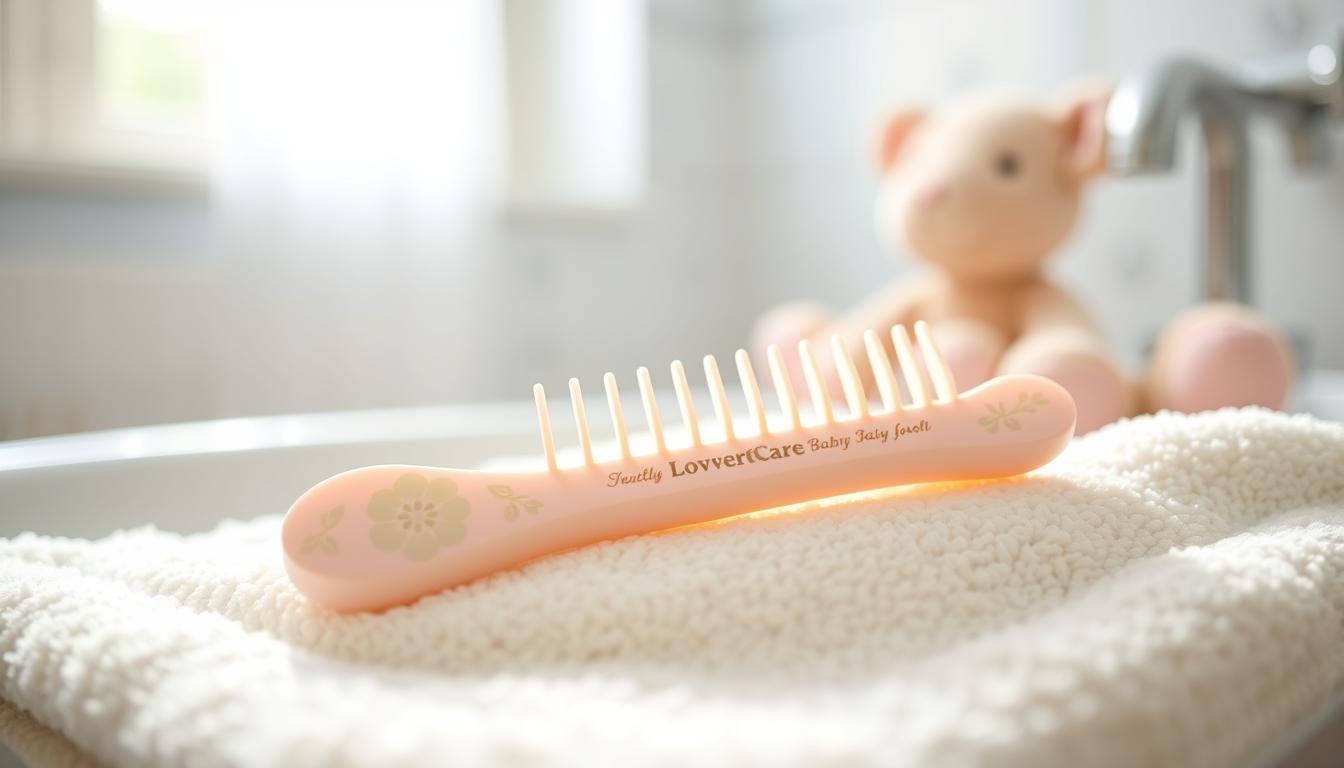
- Hold small sections above a tangle to reduce tugging on sensitive skin.
- If mats form at the nape, add a drop of warm water to ease the comb through gently.
- Clean tools after use by rinsing and air-drying to keep the routine hygienic.
- Choose soft cotton pillowcases and low-friction hats to cut down on overnight rubbing.
| Tool | Use | Benefit |
|---|---|---|
| Wide-toothed comb | Detangle wet strands | Minimises snagging and breakage |
| Soft-bristle brush | Daily smoothing when dry | Distributes oils; calms scalp |
| Soft cotton pillowcase | Between grooming sessions | Reduces friction and tangling |
Styles and accessories: cute looks without the damage
A relaxed approach to styling prevents unnecessary tugging and lasting damage. We want looks that are adorable and safe for delicate strands.
Skip tight ponytails and harsh clips. Tight elastics and metal clasps pull on follicles and can cause hair damage over time.
Choose soft, low‑tension options instead. Fabric bows, gentle headbands and wide, soft bands sit lightly on the head and avoid stress.
Soft headbands and low-tension options
Rotate partings and styles so one area is not always under pressure. This reduces wear on scalp hair and keeps strands smooth.
- Opt for cotton or knit caps with a gentle fit when outdoors; breathable materials cut friction and heat.
- Remove accessories before naps to prevent pressure marks and tangles.
- Check bands for seams or metal bits that could snag; choose fabric‑covered options and keep them clean and dry.
Remember: natural wisps are lovely. Simple, low‑tension styling protects the little one and supports comfortable, long‑term care.
Cradle cap and scalp care: soothe, lift, and protect
Cradle cap is common and usually harmless, but it can look worrying when flakes build up on the scalp. With a calm routine we can soften scales and protect the skin while follicles settle.
Gentle exfoliation and regular cleansing
Before bath time, massage a few drops of a gentle oil into flaky patches and wait 10–15 minutes. This loosens flakes so shampoo can remove them more easily.
Use a mild, fragrance‑free shampoo and rinse thoroughly. After washing, use a soft brush to lift loosened flakes. Avoid scraping or picking — that can irritate skin and cause minor strand loss.
- Cradle cap usually clears in the first months with steady care.
- Keep the head cool and dry; breathable caps and short wear reduce trapped moisture.
- Try coconut oil or a light plant oil, but patch-test first and rinse well at bath time.
When to chat with your GP or child and family health nurse
If scaling becomes red, swollen or oozes, or your little one seems uncomfortable, consult your GP or child and family health nurse promptly.
Most cases improve gradually. Gentle treatment and patience protect baby skin and help baby hair stay soft as the scalp heals.
Coconut oil and other gentle moisturisers: when they help
A light dab of natural oil can lock in moisture after a warm bath and soothe a dry scalp. Limited research suggests compounds in coconut oil may reduce damage and support a calm scalp environment.
Applying a tiny dab post-bath
After bathing, warm one small drop of coconut oil between clean hands.
Smooth it over damp hair and the scalp to seal moisture without weighing strands down.
- After bath: apply one small dab to damp scalp and hair to lock in moisture.
- Choose simple, fragrance‑free oils and moisturisers to care for baby skin and cut irritation risk.
- Massage lightly on dry patches, leave for a few minutes, then cleanse at the next wash.
- Keep oil away from the eyes and use sparingly—too much can attract lint and weigh fine strands down.
- For cradle cap, pre-wash oil softening plus a mild shampoo and soft brushing helps lift flakes.
- If any irritation appears, stop use and return to gentle cleansing until skin settles.
Simple, light moisturising supports a calm scalp where soft strands can thrive. Save richer creams for the body and keep scalp care minimal and soothing.
Growth basics: why babies lose hair and when it returns
Many little ones experience a period of shedding when postpartum hormones settle. This is a normal phase as the body transitions after birth.
The exogen phase is the technical name for shedding. It often starts around 2–3 months when pregnancy hormones drop. Shedding may be patchy or spread across the scalp. Friction at the nape can add to visible loss. In most cases, this is temporary and regrowth follows.
The timeline and what to expect
Many babies show fuller coverage by about six months, though some take longer. For some families the first clear regrowth appears in the first year. Others may notice major changes closer to two or three years.
New strands can differ in colour and texture from newborn hair. That’s normal. Hair follicles stay the same in number; what changes is the timing of growth phases and the traits of the new strands.
- Why loss happens: hormone shifts and the exogen cycle.
- How it looks: patchy or diffuse shedding; friction can increase loss.
- When it returns: many see regrowth by six months; full changes may take years.
- Care: gentle wash days, soft tools and low-tension styling protect the baby scalp while hair grows back.
| Feature | Typical timing | What to expect |
|---|---|---|
| Shedding (exogen) | ~2–3 months | Temporary loss as hormones fall |
| Early regrowth | ~4–12 months | New strands with changing colour/texture |
| Longer-term change | Up to 2–3 years | Fuller coverage and mature texture |
If shedding is red, sore or worsening, check with your GP for reassurance. With time and gentle care, hair loss eases and natural hair growth returns on the child’s own schedule.
Everyday habits that support hair and scalp health
Simple daily habits protect the scalp and cut down on friction-related wear. These small steps are easy to add to one calm routine and help strands stay soft as they grow.
Tummy time and upright play to reduce friction patches
Build short tummy time sessions while your little one is awake and supervised. This reduces pressure on the back of the head and helps prevent friction patches.
Upright cuddles and carrying upright also spread contact points so one spot is not always under pressure.
Avoid over-brushing and never brush wet hair
Less is more. Too much grooming can cause breakage and may make babies lose more visible strands.
After a bath, use a wide-toothed comb on damp strands rather than a brush. This protects the cuticle and eases tangles with minimal pulling.
Trim tips for long fringes and tangles
Trim only when the child is calm and rested. A tiny fringe cut keeps hair out of the eyes and reduces knotting.
Keep sessions short and soothing—soft fabrics and a gentle lap make trims easier for everyone.
Bath-time water temp and towel-drying gently
Use lukewarm water and a light touch at bath time. Pat-dry with a soft towel rather than rubbing to protect fibres and skin.
- Daily rhythm: brief comb, gentle pat-dry, calm cuddle.
- Choose soft bedding and vary positions while always following safe sleep guidance.
- Use low-tension styles and skip tight elastics to protect comfort and softness.
Over weeks, these habits create a kinder scalp environment that helps grow hair naturally and reduce the chance of hair loss over time.
Nutrition and products: simple choices for Aussie families
Good nutrition and kind product choices work together to support gentle scalp health and steady growth.
Before six months, breastmilk or formula provides the nutrients infants need. We recommend holding off on solids until your health nurse gives the go‑ahead.
When solid foods start, focus on variety. Offer protein, iron, healthy fats, whole grains and vitamins A, B, C and E to support overall growth and hair growth.
- Early months: breastmilk or formula is enough.
- When introducing solids: include legumes, lean meats, eggs, avocado, whole grains and colourful veg.
- For skin and scalp: omega‑rich foods and vitamin C help absorption of iron and repair.
Pick a gentle shampoo baby formula with no dyes or strong fragrance. Fewer ingredients and fragrance‑free options reduce irritation to sensitive baby skin.
Wash baby hair as needed — usually a couple of times a week. Watch the scalp and adjust. Too‑frequent shampooing can strip natural oils.
| Stage | Focus | Recommended items |
|---|---|---|
| 0–6 months | Nutrition baseline | Breastmilk or formula |
| 6+ months | Solid foods | Protein, iron, healthy fats, whole grains |
| Daily care | Products | Fragrance‑free, dye‑free shampoo; light moisturiser if needed |
If the scalp shows dry patches, use a small amount of a baby‑safe moisturiser and rinse oils well at the next wash. Patch‑test new products and add one at a time to spot sensitivities.
Conclusion
Slow, steady care, patience and simple choices help scalp comfort while gentle regrowth happens. We recommend a calm routine: mild, fragrance‑free products, soft tools and low‑tension styling to protect delicate fibres.
Remember: shedding in early months is common and often followed by new growth within the first year. Support this with tummy time, varied positions and straightforward nutrition once solids begin.
If you feel unsure, check in with your GP for reassurance and practical advice. Take care with small, steady steps — savour the cuddles and the moments as hair finds its own rhythm over time.
FAQ
How can we keep our little one’s hair soft without using harsh chemicals?
Use a mild, goat milk-enriched cleanser formulated for sensitive skin, rinse well and limit washes to a few times a week. Gently pat the scalp dry, avoid heat and choose soft accessories. Natural oils like a tiny dab of coconut oil can be used sparingly to nourish the scalp after a bath.
What’s normal for newborn hair in the first months?
Many infants are born with fine, sometimes patchy growth that sheds during the first months due to postpartum hormone shifts. Follicles formed before birth produce that initial coat, which often thins and then regrows with different colour or texture as baby matures.
Why might colour and texture change over time?
Changes happen as hormones settle and new hair replaces the first growth. Differences in pigment and curl pattern are common; genetics and natural development determine final colour and texture over the first year or two.
What essentials should be in a gentle care routine?
Keep a simple routine: a gentle shampoo a few times weekly, a soft-bristle brush and a wide-toothed comb, and a light moisturiser for dry patches. Wear breathable hats and avoid heavy products that weigh strands down.
How often should we wash the scalp to keep strands healthy?
About two to three times a week is enough for most infants. More frequent washing can dry delicate skin. Always use lukewarm water and a small amount of mild cleanser, then rinse thoroughly.
What’s the right way to shampoo a baby’s scalp?
Support the head, wet the scalp with lukewarm water, apply a small amount of gentle shampoo, lather softly with fingertips, and rinse carefully. Pat dry with a soft towel — avoid rubbing which can irritate skin and cause breakage.
How do we brush and detangle without causing breakage?
Use a soft-bristle brush or wide-toothed comb. Start at the ends and work up gently, avoid over-brushing, and never brush when hair is soaking wet. For small tangles, use fingers first, then a comb to reduce pulling.
Are there styles and accessories that avoid damage?
Yes—choose soft headbands, fabric scrunchies and low-tension clips. Avoid tight ponytails, rubber bands or metal clips that pull at the scalp and can cause traction or breakage.
How do we soothe cradle cap and care for the scalp?
Soften scales with a little natural oil, gently massage to lift flakes, then wash with a mild cleanser. Regular gentle exfoliation with a soft brush helps. If redness or thick scaling persists, speak with your GP or child and family health nurse.
When should we seek medical advice about scalp issues?
Contact your GP or child and family health nurse if the scalp becomes very red, inflamed, weeps, or if scales don’t improve with gentle care. Professional advice is important for persistent or infected conditions.
Is coconut oil safe to use on the scalp, and how should we apply it?
A tiny dab of coconut oil can help moisturise dry areas after a bath. Apply sparingly, massage lightly, then wash out at the next bath to avoid build-up. Test a small patch first to check for sensitivity.
Why do infants lose hair and when will it regrow?
Hair loss is usually part of the exogen phase and a response to shifting hormones after birth. It’s common in the first six months; regrowth often appears by nine to twelve months, though timing varies.
What everyday habits support scalp and strand health?
Encourage tummy time and upright play to reduce friction patches, avoid over-brushing, never brush while hair is soaking wet, trim long fringes to prevent tangles, and use gentle towel-drying with lukewarm water.
How does nutrition affect scalp and hair growth?
Good nutrition supports healthy development. Breastmilk or formula is primary in early months, then gradual introduction of whole foods provides vitamins and minerals that help skin and hair health as little ones grow.
How do we choose suitable shampoos and products for sensitive skin?
Look for products free from dyes, strong fragrances and harsh detergents. Mild, pH-balanced formulas with natural moisturisers like goat milk are kinder to delicate skin and help maintain the scalp’s barrier without stripping natural oils.