
Curious which common habits could be doing more harm than good at bath time?
Washing your baby can feel simple, but a few small slips make skin sore or dry. We set a calm scene and show a gentle, step‑by‑step guide so parents can avoid those mistakes.
In the first weeks, baby skin is still forming a protective barrier. A soft approach to products, the right water temperature and careful support of the head help keep bath time safe and soothing.
We cover essentials: how often to give baths, why plain water may be best early on, where to check folds, and simple safety moves like staying within arm’s reach and emptying the tub straight away.
Key Takeaways
- Delay the first full bath and favour sponge baths until the cord stump falls off.
- Keep water about 37–38°C and check with wrist, elbow or a thermometer.
- Use mild, soap‑free cleansers sparingly to protect the skin barrier.
- Always support the head, keep the face clear of water and stay within arm’s reach.
- Baths 2–3 times a week usually suit newborn skin; top‑and‑tail on busy days is fine.
Why baby skin needs extra care at bath time
A newborn’s skin barrier is still learning how to keep moisture in and irritants out. That makes it easy to lose natural oils and become dry or sore after a long soak or a harsh product.
Delicate barriers dry fast. Thin skin means moisture escapes quickly. Vernix is protective in the first days, so plain water is usually best while the skin finds its balance.
Common habits that strip skin: very hot water, long baths, strong soaps and bubbly formulas. These can remove oils that protect comfort and health.
Pay special attention to creases and folds—neck, armpits and thighs—as trapped moisture can cause irritation. Pat the face and folds dry rather than rubbing.
- Keep baths short and warm, not hot.
- Use plain water in early days and a mild, soap‑free cleanser sparingly when needed.
- Wipe milk dribbles and crumbs gently between bath days to protect skin.
“Gentle, calm routines protect skin while helping families build a soothing bath time habit.”
Set up for success: water, room temperature and a safe bath space
A well-prepared bath space is the foundation of a gentle and safe routine. We plan the area, gather supplies and set the tap so the moment we lift the little one, everything is ready. This keeps the experience calm and controlled.
Warm water guide: keeping baths around 37-38°C
We aim for warm water near 37–38°C so the skin feels neutral and comfortable. Check the temperature with your wrist or a bath thermometer. For extra protection, run cold water first, then add hot and swirl to mix.
Room warmth, lighting and timing so baby stays calm
Make sure the room is warm and the lighting soft. Choose a quiet time when the household isn’t rushed. Many families bathe before bed; the calm routine can help settle sleep patterns.
Checklist: baby bath, cotton or washer, mild cleanser, towel, clean nappy and clothes
We gather everything within arm’s reach:
- baby bath or clean sink
- soft cotton or washer and a mild cleanser
- large towel ready to wrap
- fresh nappy and clothes
Safety note: use a non‑slip mat or towel in the base and remember bath aids are supports, not substitutes for supervision. Always stay within arm’s reach.
Washing your baby: step-by-step for newborns and young babies
A calm, step‑by‑step routine helps keep little skin safe while we learn what soothes and protects.
Top-and-tail routine when skipping a full bath
We keep it simple. Use cotton wool and warm water to wipe each eye from the inner corner out with a fresh piece each time. Then clean the face, ears and neck creases gently.
Add a little liquid cleanser to the water only if hands and feet need a wash. Finish by cleaning the bottom last and patting all folds dry.
Sponge baths while the cord stump is attached
For newborns, sponge baths protect the umbilical stump. Keep water off the stump, use a soft cloth and dry the area thoroughly so it stays clean and dry.
Immersion bath basics
For a full bath, keep water shallow and about 37–38°C. Support the head and shoulders with one hand while the other washes from head to toes.
Use plain water on the face and a mild, soap‑free cleanser sparingly on skin and hair. Rinse the scalp well so no residue dries delicate skin. Pour a little warm water over the body to keep them cosy.
Drying creases and finishing
Lift out with a steady hold, wrap in a towel and pat dry. Focus on folds under the neck, arms and thighs so moisture does not sit in any area.
- Key tips: slow steady movements, gentle hold behind the head, never leave alone.
- Sequence: head to toes, finish with the nappy area and a cuddle.
“A calm routine builds confidence and keeps skin comfortable.”
How often should you bathe a baby without drying their skin?
A simple rule for early care: less frequent baths often protect delicate skin best.
For most newborns, two to three baths a week are enough to keep them clean while guarding against dryness. Short, warm soaks with minimal product preserve natural oils and support skin health.
On non‑bath days we suggest a top‑and‑tail tidy: quick face, hands and nappy‑area cleans to manage milk and spills without over‑washing. As babies start solids, families often increase baths to manage mealtime mess.
If the little one enjoys water, a brief warm bath still counts — there’s no need to extend time as the water cools. Let skin comfort guide choices: if you spot dryness, cut back on products, shorten baths and space them across the week.
- Tip: keep baths short and calm — a few minutes is enough.
- Watch patterns over time so our care matches each child’s needs.
“Balance cleanliness with softness to protect skin and support overall health.”
Choosing bath products that are kind to baby skin
We pick products to protect the skin barrier, not strip it. A simple, gentle bottle on the shelf makes bath time kinder to delicate skin.
Soap-free, mild cleansers work best. Use them sparingly for a quick clean of sticky areas and the nappy area. Many baby washes double as shampoos—rinse the scalp and head well so no residue dries the skin.
What to avoid
Avoid bubble bath, strong fragrances and heavy soaps. These can dry or irritate skin and increase the chance of soreness in folds or the genital area.
Moisturise or plain water?
Plain water is best in the first month for most infants and for premature babies follow health advice. If skin looks dry after a bath, apply an unscented baby lotion while skin is still damp.
- Simple rules: small amount of product, brief warm bath, rinse thoroughly.
- Choose products labelled for babies and paraben-free.
- Watch how skin responds and adjust — less is often more.
“A little thought at the sink goes a long way to protect skin and support comfort.”
Special situations: umbilical cord stump, circumcision and vernix care
Some early care moments—like the cord stump, a circumcision or vernix—need a gentler, tailored approach. We keep routines simple and calm so healing is not interrupted.
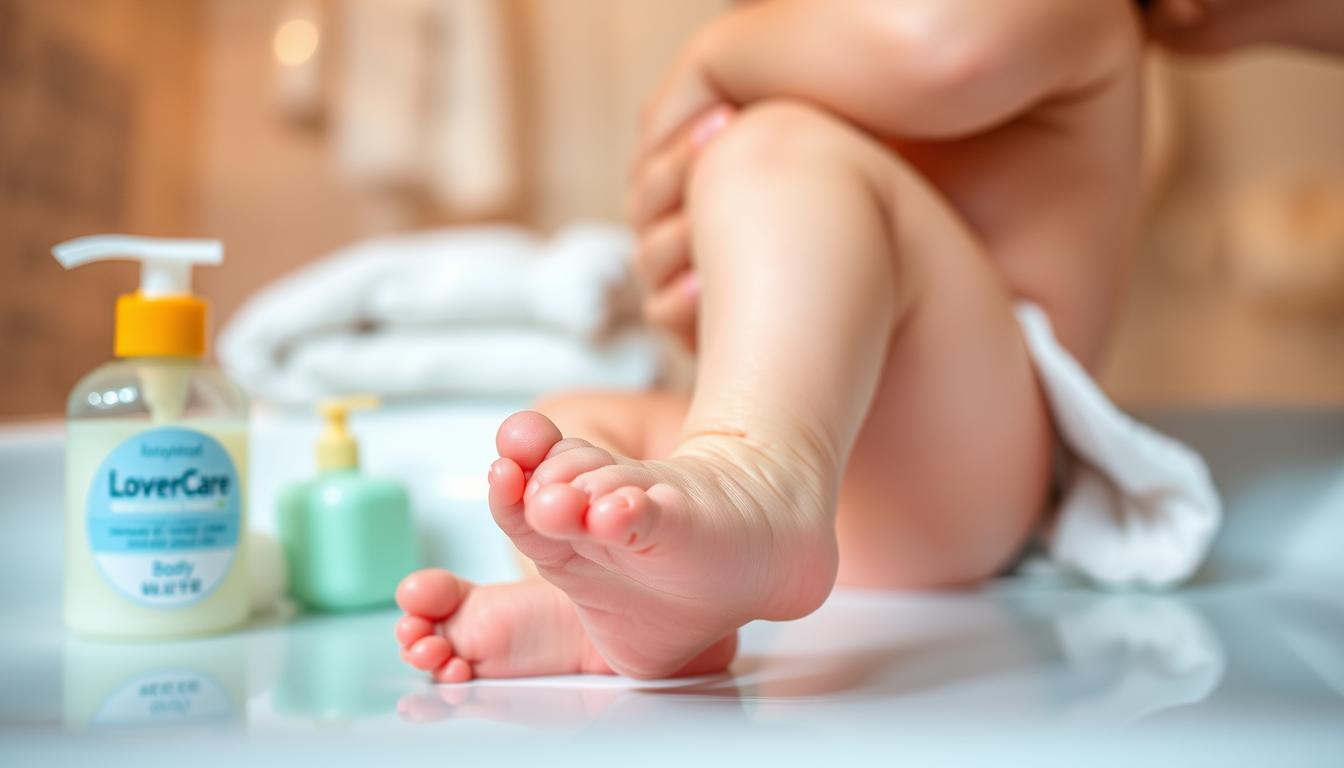
Keeping the umbilical cord stump clean and dry
Sponge baths are best until the umbilical cord stump falls away, usually within about 1–3 weeks.
Use a soft cloth and keep water off the stump area. Clean only if it is visibly soiled, then pat dry gently.
Seek help if you see bleeding, a bad smell or heavy discharge—these signs need prompt attention from a health professional.
Circumcision aftercare and when to avoid immersion
After a circumcision, avoid immersion for the first two days. Instead, use warm, gentle water to cleanse around the healing site.
Keep products off the area and dry carefully. Short, calm baths help protect healing and comfort while we watch for any issues.
Vernix, premature skin and plain-water guidance in early days
Vernix is protective and need not be washed away in the first days. For most newborns we recommend plain water during the first month.
Premature skin is more delicate—follow the healthcare team’s advice. Keep baths short, warm and focus on drying without rubbing to support safety and gentle care.
As baby grows: adapting bath time from head control to sitting up
A little growth changes how we run bath time. We keep the calm routine but shift how we hold and help as skills appear.
From 3–4 months: helping keep face clear of water
At about three to four months, many infants gain steady head control. We still support the neck and shoulders and keep the face well above the water.
Tip: keep one arm ready under the shoulders so hands are free to wash gently. This small change lets wriggles happen without compromising safety.
From 6–9 months: moving to the big bath and safe play
When sitting becomes reliable, the baby bath may feel tight. Moving to the bigger tub can give space to splash while we stay close.
Use a non‑slip mat and a cushioned spout cover. Keep water shallow and warm, offer simple toys, and rinse soap off quickly so they do not sit in suds.
- Always stay within arm’s reach and never leave alone.
- Encourage sitting, not standing, and finish with a cosy wrap and cuddle.
“Small adjustments keep the routine calm and the focus on comfort and safety.”
Non‑negotiables for bath safety in Australian homes
Every bath must start with active supervision — there is no safe moment to step away. We stay within arm’s reach from the first splash until the tub is empty. Never leave baby alone, even for a second.

Prepare and check the room before you begin. Make sure taps are off, the water sits at about 37–38°C and any phones or distractions are out of reach. Do not place the little one in while water is running.
Practical safety steps
- Supervision: never leave baby alone; stay within arm’s reach at all times.
- Bath aids: use non‑slip mats and a spout cover, but remember aids are not safety devices.
- Water and temperature: keep depth shallow, run cold water after filling and set hot water delivery to a maximum of 50°C.
- Aftercare: empty the bath straight away, shut the door and keep plugs out of reach.
“A wrist check or a quick thermometer read keeps water comfortably warm — safety is simple and consistent.”
We also recommend a first aid resuscitation course so caregivers are ready if an incident occurs. Small routines save lives and keep bath time calm and warm.
Conclusion
A focused routine turns bath time into a small ritual of care and connection. Keep baths short and warm, use plain water in the first month and choose minimal cleanser when needed.
Key tips: aim for 2–3 baths a week, keep water near 37–38°C and support the head so the face stays clear of splash. Stay within arm’s reach and set hot water delivery to a safe max 50°C.
Have a soft towel ready and pat dry folds, creases and the neck. Use cotton or a soft washer between baths for quick cleans of the bottom and any messy spots.
With these steady habits, bath time becomes a calm part of the day that protects skin and deepens connection.
FAQ
What common bath-time mistakes can harm baby skin?
Using water that’s too hot, over-cleansing with strong soaps, scrubbing folds and leaving skin damp are common mistakes. These remove natural oils, dry sensitive skin and can cause redness or irritation. Keep baths short, use mild, soap-free cleansers and pat skin dry—especially in creases.
Why does a newborn’s skin need extra care during baths?
Newborn skin has a delicate barrier that loses moisture quickly. It’s thinner and more prone to irritation from temperature changes, fragrances and harsh cleansers. Gentle handling, plain water or a mild goat milk‑enriched cleanser and quick drying help protect that barrier.
How hot should the bath water be?
Aim for about 37–38°C. That’s warm but not hot. Test with a wrist or elbow or use a reliable bath thermometer. Cooler water can be startling; hotter water risks scalding and dries skin faster.
How should we set up the room and bath space so the baby stays calm?
Keep the room warm and free of drafts, dim the lights if needed and have all items—clean nappy, towel, mild cleanser, cotton or washer—within arm’s reach. A calm, organised space helps the whole routine run smoothly and keeps the baby comfortable.
What should be on our bath-time checklist?
Ready the baby bath or basin, a soft cotton cloth or washer, a mild soap‑free cleanser, a hooded towel, a clean nappy and fresh clothes. Having these to hand avoids leaving the infant unattended on the change table or bench.
What is a top‑and‑tail routine and when should we use it?
Top‑and‑tail means washing the face, neck, hands and bottom without a full immersion bath. It’s great between full baths and for newborns whose cord stump hasn’t healed. Use a warm, damp cotton cloth and gentle movements to clean delicate areas.
When should we give sponge baths instead of a full bath?
Sponge baths are recommended while the umbilical cord stump is present and for medical reasons such as recent circumcision if advised. They keep the stump dry and lower infection risk until healing is complete.
How do we do an immersion bath safely?
Support the head and shoulders with one arm so the face stays well above water. Keep water shallow and warm (37–38°C). Use a gentle cleanser only where needed, rinse thoroughly, then lift out and dry folds carefully.
How should folds and creases be dried?
Pat gently with a soft towel—don’t rub. Open skin folds (neck, underarms, groin) and dry each crease to prevent moisture trapping, chafing and soreness. Apply a thin layer of gentle moisturiser if skin looks dry.
How often should we bathe to avoid drying delicate skin?
For most newborns and infants, 2–3 baths per week is enough. Daily top‑and‑tail cleansing of the face, neck and bottom is fine. If skin is dry, reduce use of soap and moisturise after baths with a fragrance‑free product.
What bath products are best for sensitive skin?
Choose soap‑free, mild cleansers with minimal fragrance and a neutral pH. Goat milk‑enriched or similarly nourishing formulas suit sensitive or dry skin. Avoid bubble baths, strong fragrances and antibacterial washes that strip oils.
When is plain water better than using a cleanser?
In the first few days, for very dry or eczema‑prone skin, or for quick top‑and‑tail cleanses, plain warm water is often sufficient. Use a mild cleanser only on areas that need it—hair, sticky bits or soiled skin.
How do we care for the umbilical cord stump at bath time?
Keep it clean and dry. Give sponge baths until the stump falls off and the area heals. Avoid submerging the stump; pat the area dry after any gentle cleaning and dress with loose clothing to allow airflow.
What special care is needed after circumcision?
Follow the clinician’s advice. Usually sponge baths are recommended until healing begins. Keep the area clean, apply any prescribed ointment and avoid full immersion until your health professional gives the OK.
Should vernix be washed off immediately after birth?
Vernix is protective and can be left on for the first 24 hours to support newborn skin. A gentle, plain‑water wipe is enough in the very early days. Premature infants may need tailored guidance from healthcare providers.
How do we adapt bath time as the child gains head control and starts sitting?
From about 3–4 months, support the torso so the face stays clear of water. Around 6–9 months, supervise closely in a larger bath, keep water shallow, and use secure, short play times. Always stay within arm’s reach.
What are non‑negotiable bath safety rules in Australian homes?
Never leave an infant alone—stay within arm’s reach at all times. Use non‑slip mats and spout covers but don’t rely on aids as safety devices. Set hot water system to a safe temperature (below 50°C) and keep tap handles turned off between uses.